PLANT HEALTH CERTIFICATION • NPPO INSPECTION • AGRICULTURAL EXPORT COMPLIANCE • INDIA
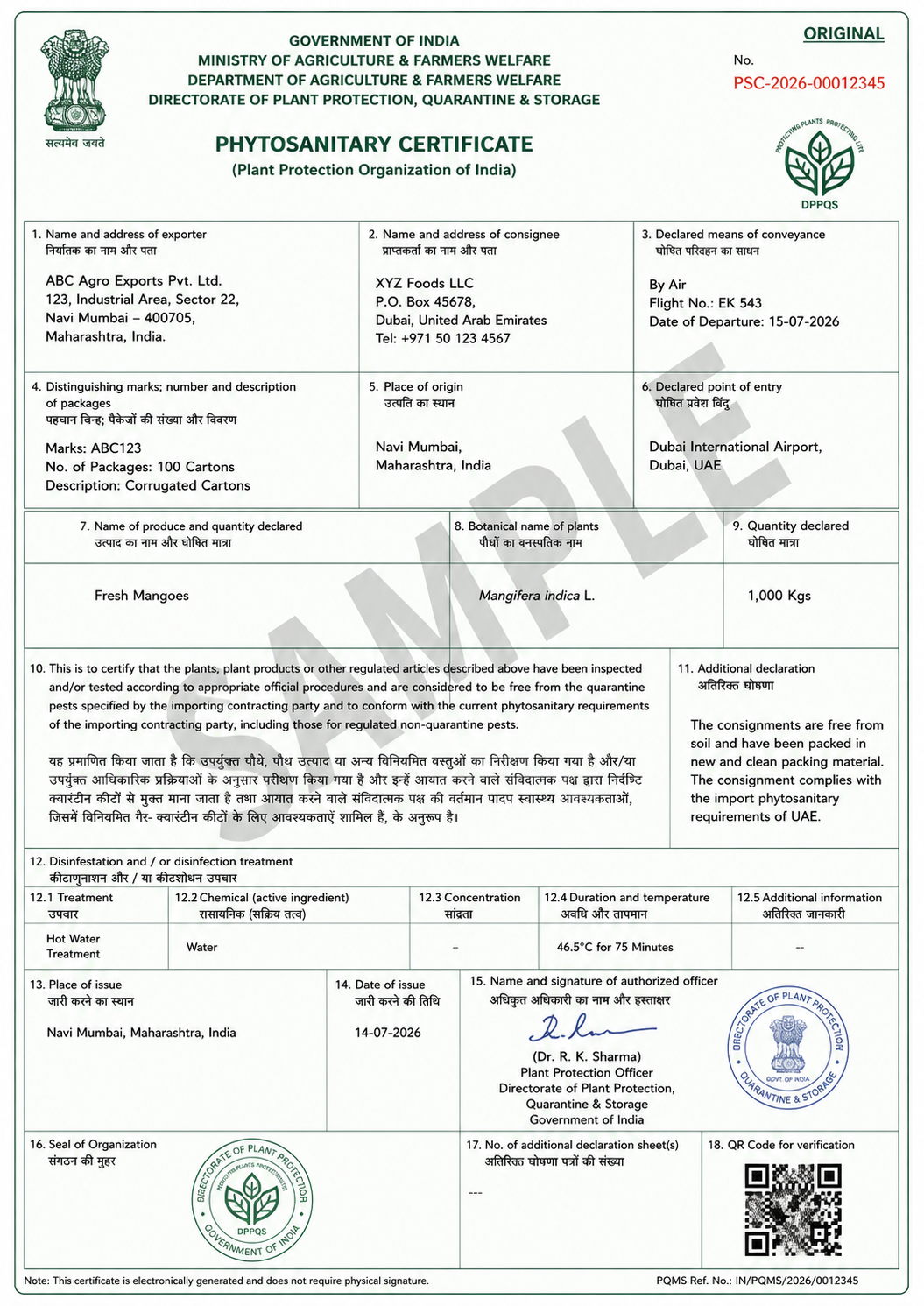
A Phytosanitary Certificate (PC) is an official document issued by the National Plant Protection Organisation (NPPO) of the exporting country - in India, this is the Directorate of Plant Protection, Quarantine & Storage (DPPQS) under the Ministry of Agriculture & Farmers Welfare. It certifies that plants, plant products, seeds, soil, or other regulated articles have been inspected by authorised plant quarantine officers and are found free from quarantine pests and comply with the phytosanitary requirements of the importing country.
The certificate is mandatory under the International Plant Protection Convention (IPPC), to which India is a signatory, and is required by importing countries before permitting entry of agricultural commodities, horticultural produce, seeds, planting material, timber, and processed plant products. Without a valid Phytosanitary Certificate, consignments may be detained, fumigated, re-exported, or destroyed at the port of entry.
Phytosanitary Certificates in India are issued under the Plants, Fruits and Seeds (Regulation of Import into India) Order, 1989 and the Destructive Insects & Pests Act, 1914, administered by the Directorate of Plant Protection, Quarantine & Storage (DPPQS).

Any exporter shipping the following categories of goods from India requires a valid Phytosanitary Certificate
All seeds, bulbs, cuttings, saplings, and nursery stock intended for planting in the importing country.
Mangoes, grapes, pomegranates, onions, potatoes, and all fresh horticultural produce exported from India.
Rice (basmati and non-basmati), wheat, maize, pulses, and other food grains exported internationally.
Logs, sawn timber, wood packaging material (ISPM-15), bamboo, and other unprocessed wood articles.
Turmeric, coriander, cumin, chilli, cardamom, pepper, and all spices and dried herbal products.
Dried flowers, cut flowers, plant extracts, essential oils, and processed agricultural commodities.
Issued for plants and plant products being exported directly from India. Certifies that the consignment has been inspected, treated if required, and meets the phytosanitary import requirements of the destination country.
Most CommonIssued when plant products originally imported into India are being re-exported to a third country, either in their original condition or after repackaging, splitting, or storage.
For Re-ExportsRequired for wooden pallets, crates, and dunnage used in international shipments. The wood must be treated (heat treatment or methyl bromide fumigation) and marked with the IPPC symbol.
ISPM-15 StandardEnsure your Import-Export Code (IEC) is active. Agricultural exporters must also obtain APEDA/RCMC registration before applying.
Submit the Phytosanitary Certificate application online through the DPPQS Plant Quarantine Management System (PQMS) portal with all required details.
An authorised Plant Quarantine Officer visits the consignment at the port, cold storage, or packing house to physically inspect the goods for pests and compliance.
If the importing country mandates treatment (methyl bromide fumigation, heat treatment, cold treatment, irradiation), it is carried out by an approved operator under PQO supervision.
Upon satisfactory inspection and treatment, the Phytosanitary Certificate is issued by the Plant Quarantine Officer and handed over to the exporter before shipment.
The original Phytosanitary Certificate accompanies the shipment. The importing country's NPPO verifies the certificate on arrival and grants entry clearance.
1 year
190+
30-35 Days
DPPQS
Direct coordination with Plant Quarantine Officers at all major ports - Delhi, Mumbai, Chennai, Kolkata, Nhava Sheva, and airports.
We prepare and review every document - PQMS application, treatment certificates, lab reports - ensuring zero rejection from the issuing authority.
Time-critical agricultural shipments require quick turnaround. We manage inspection scheduling and follow-up to avoid shipment delays.
Each country has unique phytosanitary import requirements. We research and advise on specific pest-free requirements, MRL limits, and treatment mandates.
A single point of contact for your entire phytosanitary certification process - from application to certificate delivery.
Hundreds of successful phytosanitary certifications across fresh produce, grains, spices, and timber exporters across India.
Let I-NEXUS handle your phytosanitary certification end-to-end - fast, accurate, and hassle-free for any commodity or destination.